

Resolution Opposing State Legislation Affecting Local Zoning Authority
CITY OF FARMINGTON HILLS, MICHIGAN
RESOLUTION OPPOSING MICHIGAN HOUSE
OF REPRESENTATIVE BILLS 5529-5532 AND 5581-5585 REGARDING
LOCAL MUNICIPAL ZONING AUTHORITY
RESOLUTION NO. R-71-26
At a regular meeting of the City Council of the City of Farmington Hills held on April 13, 2026, at 7:30 p.m., Eastern Daylight Savings Time, with those present and absent being,
PRESENT: ALDRED, BOLEWARE, BRIDGES, DWYER, KNOL, RICH AND STARKMAN
ABSENT: NONE
the following preamble and resolution were offered by Councilmember Aldred and supported by Councilmember Bridges:
WHEREAS, the City of Farmington Hills is organized and existing under the laws of the State of Michigan and is charged with protecting the public health, safety, and welfare; and
WHEREAS, the Michigan House of Representatives recently introduced a package of bills, including HBs 5529-5532 & HB 5581-5585 (referred to in this Resolution as the “bills”), which have the purpose and effect of preempting local governments from exercising their traditional authority to plan and zone for residential land uses within their communities; and
WHEREAS, among other things, the proposed bills prohibit every community in the State from requiring parcel and lot sizes in any single-family residential district to be more than 1,500 square feet where houses are served by public water and sewer, which would undermine the ability of local communities to have different densities in different residential districts, or even having density limitations at all; and
WHEREAS, if enacted into law, the bills would also: (1) allow, without any substantive review by the local government, a second or “accessory” home to be built onto an existing home, or to be built on any existing lot (e.g., in the side or back yard of an existing residential home on a residential lot), with such additional house being permitted under State law, without regard to local regulations, to be up to 800 square feet in area or up to 75% of the existing home, whichever is less; (2) allow that second or accessory house to be placed within 5 feet of a neighbor’s rear or side yard property line (and in fact allow any home to be built 5 feet from a neighboring property line as a “universal” setback in a “metropolitan” area of the State, including Farmington Hills); (3) allow a basement as part of that second home, with the same 5 foot setback; (4) allow that second or accessory home to be manufactured off-site and transported to the existing home site to be installed (i.e., allow mobile homes on every residential lot in the State); (5) allow duplex homes in every single-family zoning district on any residential lot; (6) preclude a community from having or enforcing minimum home square footage requirements over 500 square feet; (7) restrict a community from adopting regulations specific to duplexes and accessory second houses; and (8) significantly limit (if not prohibit) communities from having architectural and/or façade materials requirements for single-family houses (given the universal mobile home authorization); and
WHEREAS, while the sentiment and intention of some of the proposed statewide changes reflected in the bills are appropriate considerations for housing policy at both the State and local level, as an essentially a statewide abolition of longstanding place-based planning and zoning rules, the bills would upend many decades of community planning that has shaped current residential neighborhoods—and in fact whole cities, townships, and villages—and that has been relied on by residents in making their own housing choices; and
WHEREAS, if enacted into law, the bills would also drastically change the process pursuant to which local communities review plans for new development and buildings, by greatly limiting the local government’s ability to effectively require the submission of plans that meet ordinance requirements and by imposing a completely arbitrary and unrealistic uniform timeframe in every community, regardless of its size and staffing, for the review of plans and the issuance of decisions with respect to plans; and
WHEREAS, these limitations will result in communities either being denied the opportunity to appropriately assure compliance with public health, safety, and other development requirements for all developments—commercial and retail and industrial as well as residential—or being obligated to deny approval of plans under the arbitrary time limits, thus actually delaying full and final review of some development proposals; and
WHEREAS, local communities are best situated to (1) assess infrastructure capabilities, such as whether a particular local government can provide residents with enough drinkable water and enough sanitary sewer capacity to dispose of dangerous human waste, so that future development and re-development may be properly planned and the health of its residents protected; (2) design adequate stormwater management systems to accommodate development while avoiding flooding and environmental degradation; (3) evaluate whether that local government can provide adequate police and fire and emergency first responder protection to all of its current and future residents; and (4) plan for the use of public facilities and spaces in a way that does not discriminate against some residents or limit opportunities for use of such resources; and
WHEREAS, local zoning and housing standards are carefully developed to reflect unique housing needs and align with the capacity of roads, stormwater systems, water and sewer infrastructure, and police and fire services, and such regulations are closely integrated with locally unique long-range comprehensive plans, capital improvement plans, and municipal budget forecasting; and
WHEREAS, increasing residential density without adequate local review and mitigation planning may result in overburdened utilities, unsafe traffic conditions, strained public safety resources, unfunded service demands, loss of greenspace, and other unintended consequences that adversely impact residents, including overcrowding and overcharging; and
WHEREAS, local planning processes are transparent and participatory as required by law, providing residents with direct access to public meetings, hearings, and elected officials, thereby ensuring accountability and community engagement in land use decisions; and
WHEREAS, the bills as written will impose significant costs on local governments (more public safety, more utilities, more flooding prevention, more parks and public buildings) with no corresponding effort to provide or acknowledge the need for a source for funding those costs, further contributing to the precarious financial position local governments already find themselves in given Headlee- and Proposal A-based limitations on taxation, reduced and unpredictable State revenue sharing, removal or limitation of governmental immunity for some local government activities, limitations on raising rates or fees in connection with development and the provision of public utility services, and other forces now affecting the ability of local governments to serve existing their residents and the public in general; and
WHEREAS, the bills as written not only are dismissive of the role of local governments in protecting residents and the public through careful and transparent land use regulations at the community level, they appear to have resulted at least in part from untrue or inaccurate criticisms of how local governments process development approvals, and propose limitations on that process that are completely unnecessary, unworkable, and, ultimately harmful to residents whose protection it is the fundamental and animating purpose of local government; and
WHEREAS, while the reported reasoning in support of the bills is the claim that they will enable and facilitate the construction of affordable housing in Michigan, there are many communities in Michigan that have adopted and successfully applied zoning ordinance provisions requiring and incentivizing affordable housing for many years, and the City of Farmington Hills and many other cities therefore support efforts to increase housing affordability and expand housing opportunities within the State of Michigan, but the proposed bills are counter-productive to that effort and contrary to the protection of the public health, safety, and welfare, as described in this Resolution; and
WHEREAS, the Michigan Municipal League has developed the MI Homes Program for local communities and the Michigan House of Representatives recently introduced a separate package of bills, being HBs 5660 and 5661, all of which support investment to accelerate housing construction and rehabilitation, while promoting updates to local zoning regulations that will help cultivate thriving communities and stimulate affordable housing and economic vitality, without usurping local authority over local land use concerns.
NOW, THEREFORE, BE IT RESOLVED that the City of Farmington Hills, by an affirmative vote of its City Council, does hereby formally oppose passage of House Bills 5529-5532 and 5581-5585; and
BE IT FURTHER RESOLVED that the City urges members of the Michigan Legislature to vote against the bills and to instead engage collaboratively with local governments to develop housing policies that promote affordability while preserving local planning authority and protecting public infrastructure systems; and
BE IT FURTHER RESOLVED that the City supports constructive dialogue and partnership with the State to identify meaningful solutions that increase housing opportunities without creating unfunded mandates or infrastructure burdens on local communities; and
BE IT FURTHER RESOLVED that the City supports legislation which seeks to reward and incentivize communities that adopt certain housing best practices and programs, which the MI Homes Program appears to support, rather than punishing local municipalities and the residents by preempting and eliminating local control and restricting the rights under current zoning laws of residents and business owners to speak and voice their support or concerns at public hearings relating to important community planning and zoning matters; and
BE IT FURTHER RESOLVED that the Farmington Hills City Clerk is directed to transmit a copy of this Resolution to Governor Whitmer, State Senator Bayer, State Senator Cavanagh, State Representative Steckloff, State Representative Hoskins, State Representative Breen, the Michigan Association of Planning, the Michigan Municipal League, the Michigan Townships Association, the Michigan Association of Counties, and other interested or affected parties.
ADOPTED: Yeas: ALDRED, BOLEWARE, BRIDGES, DWYER, KNOL, RICH AND STARKMAN
Nays: NONE
Absent: NONE
RESOLUTION DECLARED ADOPTED.
STATE OF MICHIGAN )
) ss.
COUNTY OF OAKLAND )
I, the undersigned, the duly qualified and acting City Clerk of the City of Farmington Hills, do hereby certify that the foregoing is a true and complete copy of a resolution adopted by the City Council of the City of Farmington Hills at a regular meeting held on April 13, 2026, the original of which resolution is on file in my office.
IN WITNESS WHEREOF, I have hereunto set my official signature, this 14th day of April 2026.
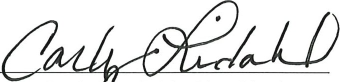
Carly Lindahl, City Clerk
City of Farmington Hills